
A controlled human study conducted within the GOLIAT project and published in Scientific Reports monitored skin temperature during exposure to 26 GHz 5G signals
Researchers used infrared thermal imaging to assess whether millimetre-wave exposure produced measurable heating effects in the skin
The findings add to previous GOLIAT studies reporting no detectable effects on stress biomarkers or brain electrical activity
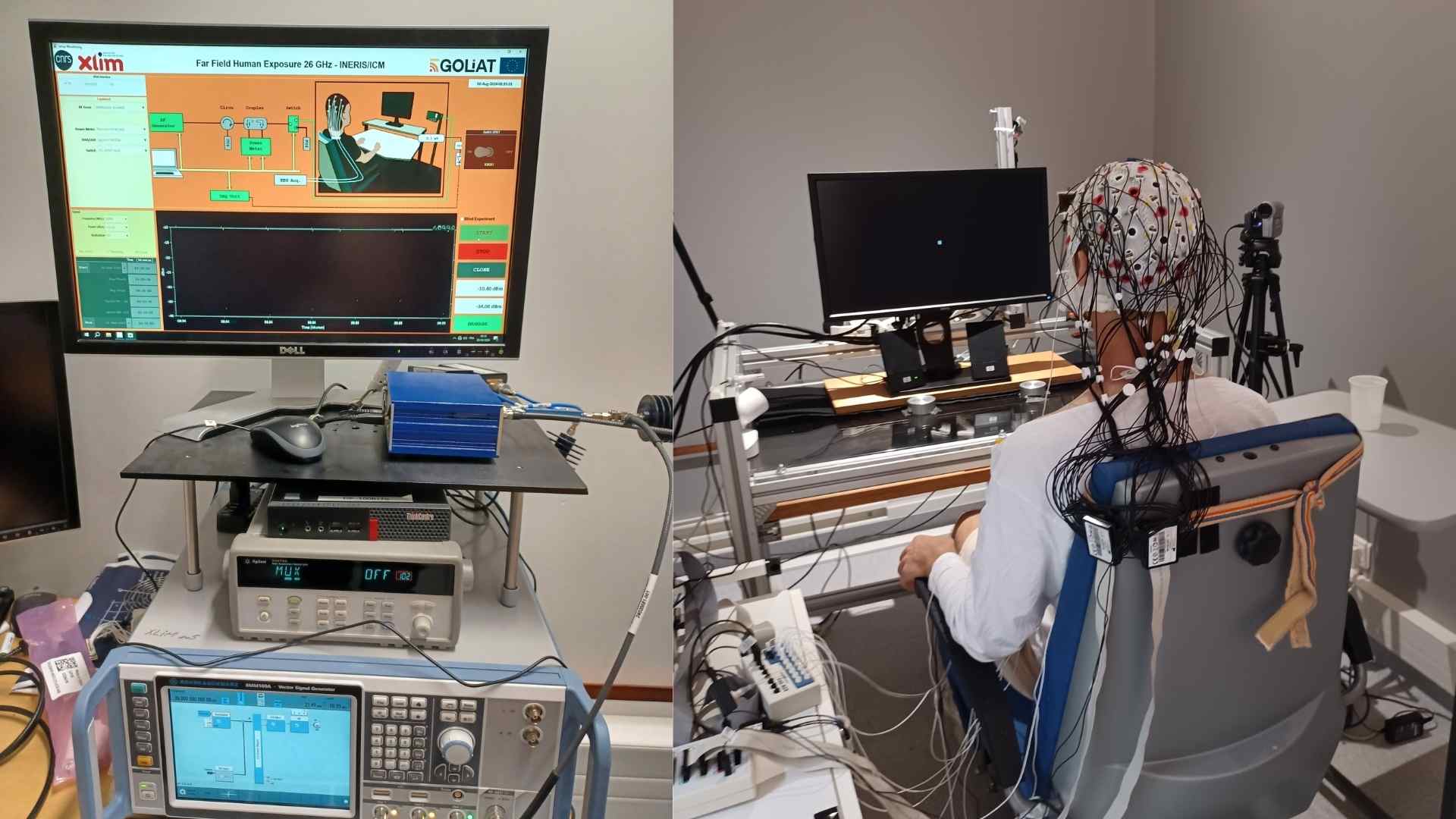
A controlled human study led by researchers from INERIS within the framework of the GOLIAT project has found no detectable thermal effects associated with short-term exposure to 5G signals in the 26 GHz frequency band. The findings have been published in the journal Scientific Reports.
The study investigated whether exposure to so-called millimetre-wave frequencies, which are expected to play an important role in future 5G networks, could produce measurable heating effects in human skin under realistic environmental exposure conditions.
Monitoring skin temperature during 5G exposure
To investigate this question, researchers recruited 31 healthy adult volunteers who participated in a randomized, triple-blind experiment. Each participant underwent both real and sham (simulated) exposure sessions separated by one week, without either the participants or researchers knowing which condition was being tested at a given time.
Participants were exposed for approximately 26 minutes to 26 GHz 5G signals at levels corresponding to the upper range of environmental exposure measurements reported in France.
During the experiment, researchers continuously monitored skin temperature using infrared thermal imaging, a non-invasive technique capable of detecting subtle temperature changes across the surface of the body. Thermal images were collected every 30 seconds from several body regions, including the face, hands and upper torso.
No measurable heating detected
The analysis revealed no significant differences in skin temperature between real and sham conditions in any of the body areas examined.
Researchers did observe a gradual decrease in hand temperature during the sessions. However, this occurred equally during both real and sham exposure and was attributed to normal physiological responses associated with remaining seated and inactive for extended periods.
“Our findings suggest that short-term exposure to 26 GHz 5G signals under realistic environmental conditions does not produce detectable heating effects in human skin in the short term, but more research is needed to fully confirm these results, including studies with repeated or long-term exposures”, says Lisa Michelant, researcher at INERIS and first author of the study.
Why thermal effects matter at high frequencies
Unlike lower-frequency radio waves used in previous generations of mobile communications, millimetre waves penetrate only very superficially into the body. Most of their energy is absorbed within the outer layers of the skin.
For this reason, skin temperature is considered one of the most relevant parameters when assessing potential biological effects at these frequencies.
“This is the first controlled human study to investigate thermal effects associated with environmental exposure to 26 GHz 5G signals,” said Brahim Selmaoui, researcher at INERIS and senior author of the study.
The study forms part of a broader series of controlled human experiments conducted within the GOLIAT project. Previous publications from the same experimental protocol reported no detectable effects on stress biomarkers or brain electrical activity during short-term exposure to 26 GHz 5G signals.
For more information, read the previous GOLIAT news story on stress biomarkers and brain activity.
Reference
Michelant, L., Delanaud, S., Hugueville, L. et al. No thermal skin effects at environmental 26 GHz field strengths relevant to 5G deployment. Sci Rep (2026). https://doi.org/10.1038/s41598-026-49616-7

 #ProjectGOLIAT
 Linkedin