
The workshops, organised by Science For Change and ISGlobal, involved between 20 and 40 students from each centre, including university students as well as secondary school and upper secondary school students
After an initial theorical session, students carried our their own fieldwork campaigns to measure 4G electromagnetic radiation levels
On a third session, participants presented their results and collaborated in science communication proposals
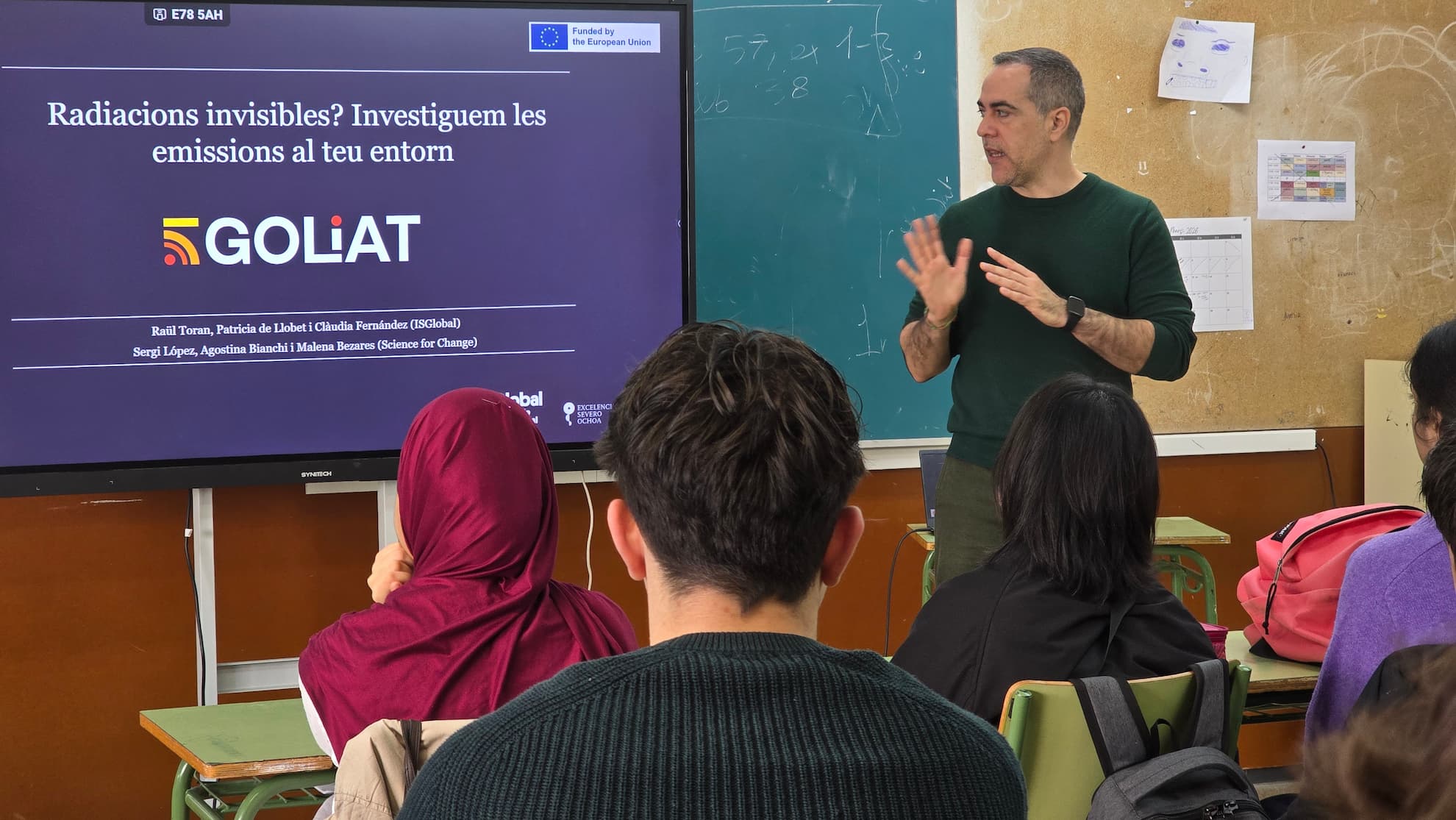
Environmental Sciences students from the University of Barcelona and students from four secondary schools in the province of Barcelona (Santapau-Pifma, Institut XXV Olimpíada, Institut Valldaura and Institut Celestí Bellera) have taken part in hands-on workshops on electromagnetic radiation measurements as part of Project GOLIAT. The activity combined theoretical and practical training, fieldwork and citizen science with the aim of fostering critical thinking among students.
The workshops, organised by Science For Change and ISGlobal, involved between 20 and 40 students from each centre, including university students as well as secondary school and upper secondary school students.
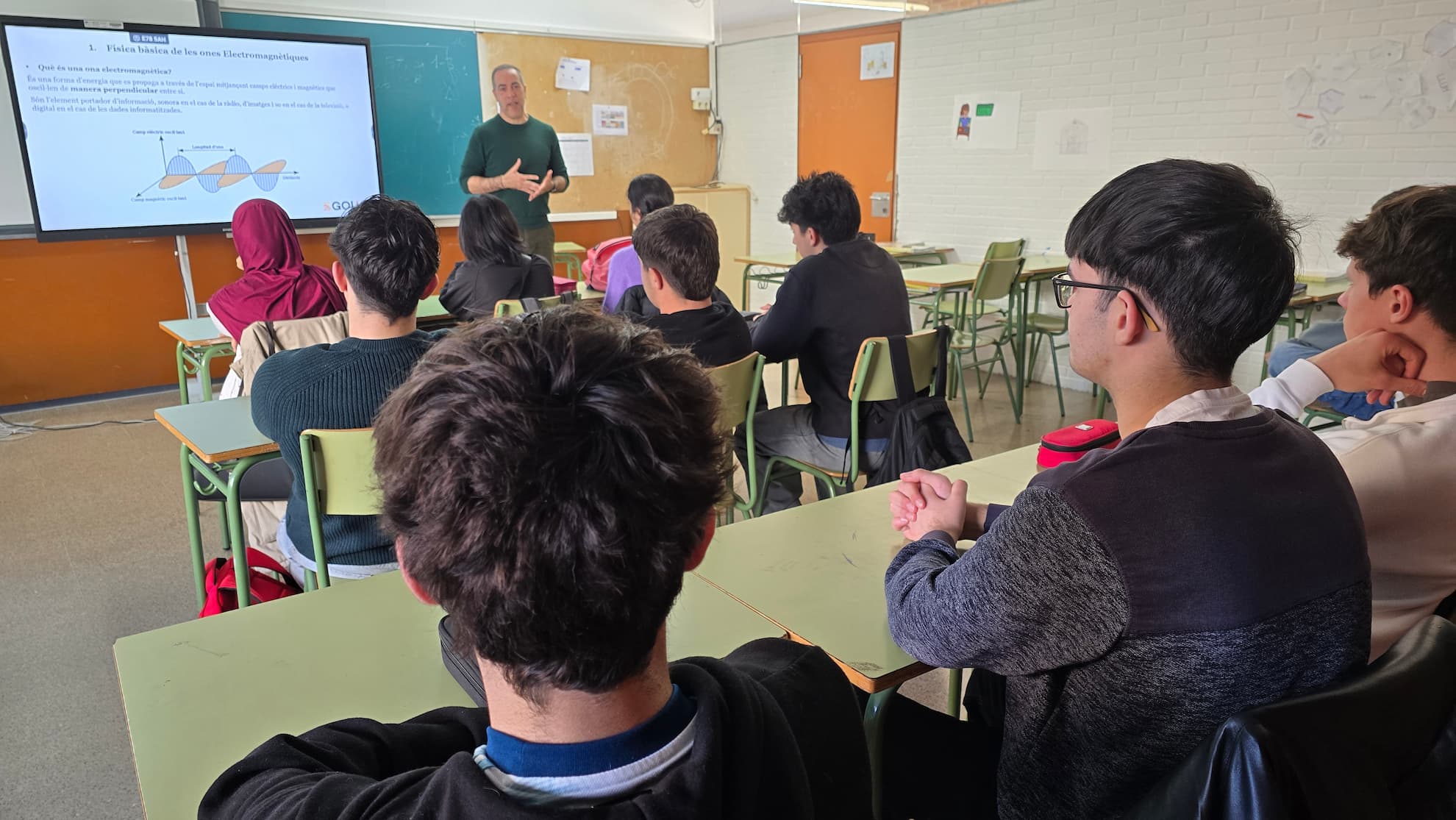
The activity was structured in three phases. The first, a theoretical session, took place in person at the Barcelona Biomedical Research Park (PRBB), where students received training on electromagnetic radiation and learned how electromagnetic field (EMF) measurement devices work. During this session, working groups were also formed and the measuring devices were distributed to launch the project.
Students then carried out independent fieldwork over a period of two to three weeks. During this time, they designed measurement routes and assessed 4G electromagnetic radiation levels in a range of everyday environments, using mobile phones both in airplane mode and during active phone calls. This process enabled them to collect real-world data, interpret the results critically and reflect on the difference between scientific evidence and perceptions or misinformation surrounding electromagnetic radiation and health.
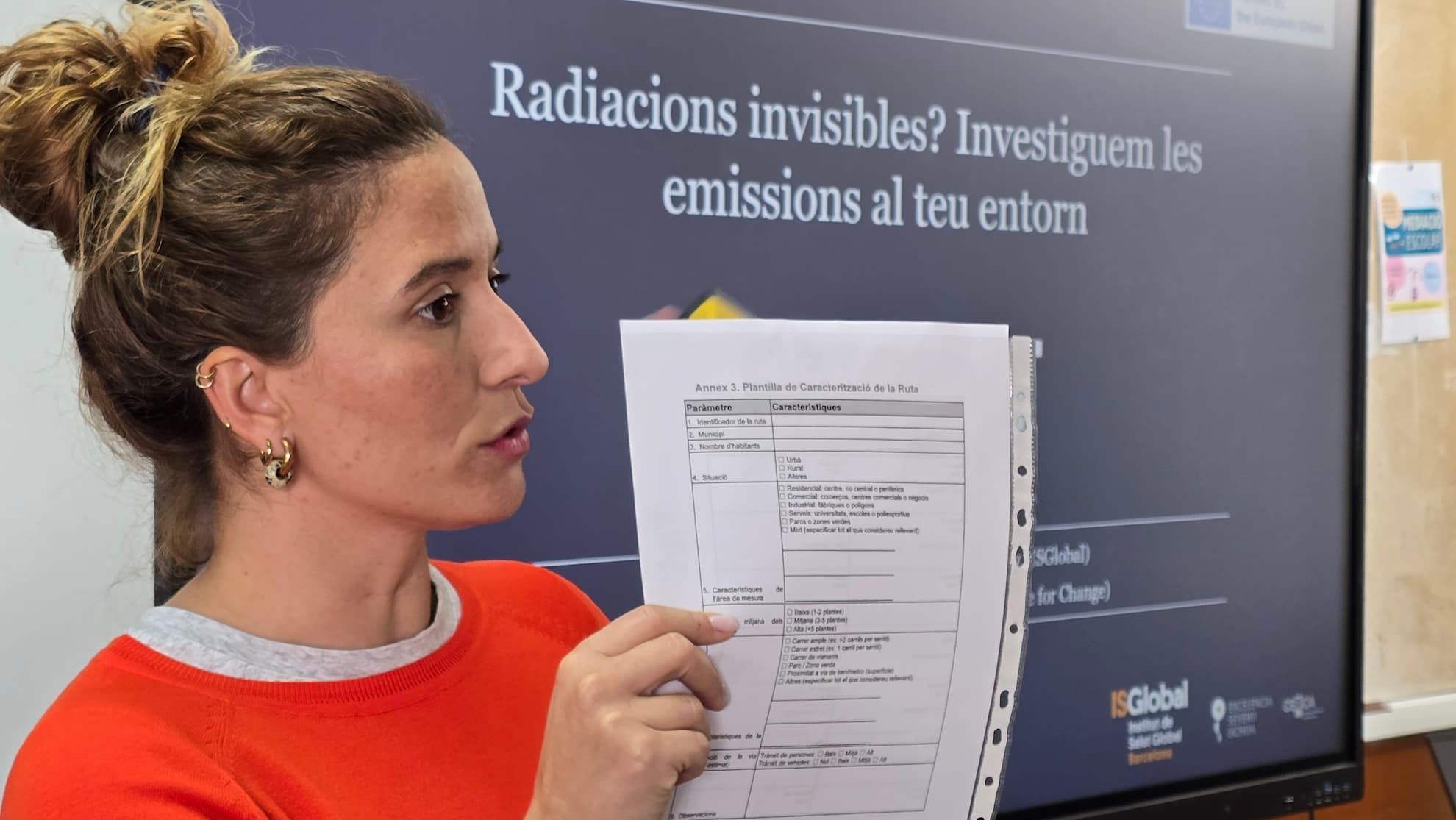
Finally, during a third in-person session held at the participating schools and coordinated by Science For Change, students presented the results of their studies. They also worked collaboratively to develop creative science communication proposals aimed at countering fake news and improving public understanding of this topic.
The workshops combined lectures, practical activities and collaborative discussions, following a citizen science approach. Their main objectives were to improve participants’ understanding of electromagnetic radiation, teach them how to measure it objectively and contribute to more rigorous communication about health and environmental risks.
This initiative, which strengthens collaboration between the scientific and educational communities, reinforces the role of students as active contributors to the generation and interpretation of scientific knowledge in the field of electromagnetic radiation.

 #ProjectGOLIAT
 Linkedin