
Twenty fixed sensors collected continuous measurements over a 17-month period
Analysis of one year of data shows clear daily patterns, with higher exposure during the day and lower exposure at night
The pilot study demonstrates the feasibility of long-term RF-EMF exposure monitoring at fixed sites across Europe
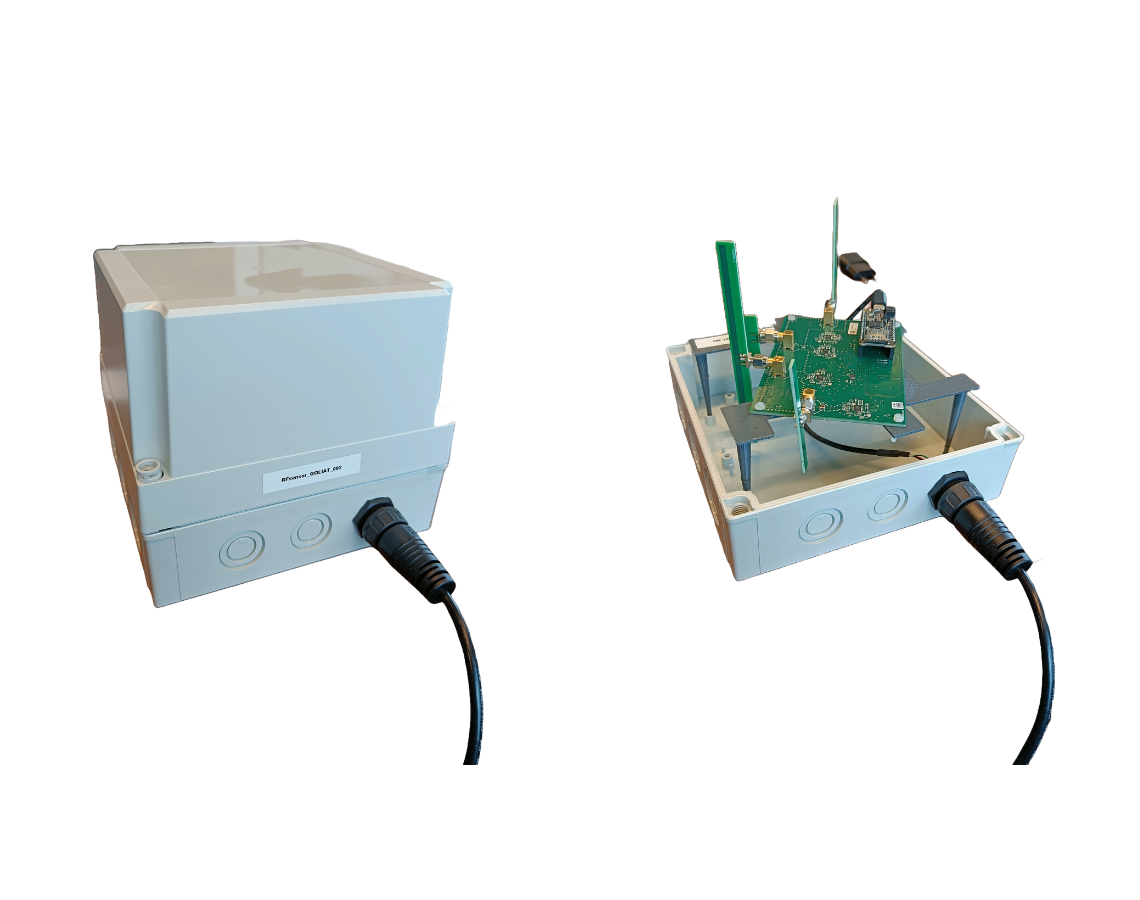
How do radiofrequency electromagnetic field (RF-EMF) levels change over time? And how can researchers accurately characterise environmental exposure as mobile communication networks continue to evolve? A new pilot study from Project GOLIAT led by Ghent University takes an important step towards answering these questions by establishing a network of fixed monitoring stations across ten European countries.
The study, published in Science of the Total Environment, deployed 20 sensors—two in each participating country—to continuously measure environmental RF-EMF exposure over the course of 17 months. Installed at fixed indoor and outdoor locations, the sensors recorded data every second across four frequency bands used by mobile communication technologies ranging from 2G to 5G.
Exposure changes throughout the day
Analysis of one full year of measurements revealed consistent daily patterns across the monitoring sites. Environmental RF-EMF exposure was generally lower during the night than during the day across all four frequency bands. The strongest day–night contrasts were observed in the 806 MHz and 1842 MHz bands, where nighttime exposure levels were 35.1% and 48.4% lower, respectively, than daytime levels. A weaker weekly pattern was also observed, with slightly lower exposure levels during weekends than on weekdays.
The researchers did not identify any consistent long-term increase or decrease in RF-EMF exposure over the one-year monitoring period. They also found no statistically significant differences in exposure levels according to the type of monitoring location, including homes, offices and outdoor sites.
The 3625 MHz band, corresponding to 5G frequencies, showed the greatest temporal variability throughout the monitoring period, with exposure levels fluctuating more over time than those measured in the lower-frequency bands. This pattern is consistent with previous studies suggesting that higher-frequency 5G bands are more responsive to changes in network traffic and adaptive transmission mechanisms.
“Our data highlight that environmental RF-EMF exposure is dynamic and that continuous monitoring can provide valuable information that would not be captured through occasional measurements alone”, says Han van Bladel, researcher at Ghent University and first author of the study.
“As mobile communication technologies continue to evolve, harmonised long-term monitoring approaches such as this one could contribute to a better understanding of how environmental RF-EMF exposure changes over time and provide valuable datasets for future scientific studies”, says Wout Joseph, researcher at Ghent University and senior author of the study.
Reference
Van Bladel H., Veludo AF., Loizeau N., Röösli M., Maule M., Vecsei Z., Molnár O., Vrijkotte T., Polanska K., Politański P., Mamrot P., Wang S., Wiart J., Grellier J., Kovalenko A., Hulls P.M., De Vocht F., Vaupotiĉ N., Guxens M., Joseph W. Temporal 2G-5G RF-EMF exposure assessment in ten European countries during one year. Science of the total environment. 2026; 1047(): 182037. https://doi.org/10.1016/j.scitotenv.2026.182037

 #ProjectGOLIAT
 Linkedin