
Scientists exposed brain cells to 5G signals in controlled laboratory conditions and found no changes in cell health or stress levels
Results were consistent across two types of brain cell types under tightly controlled conditions
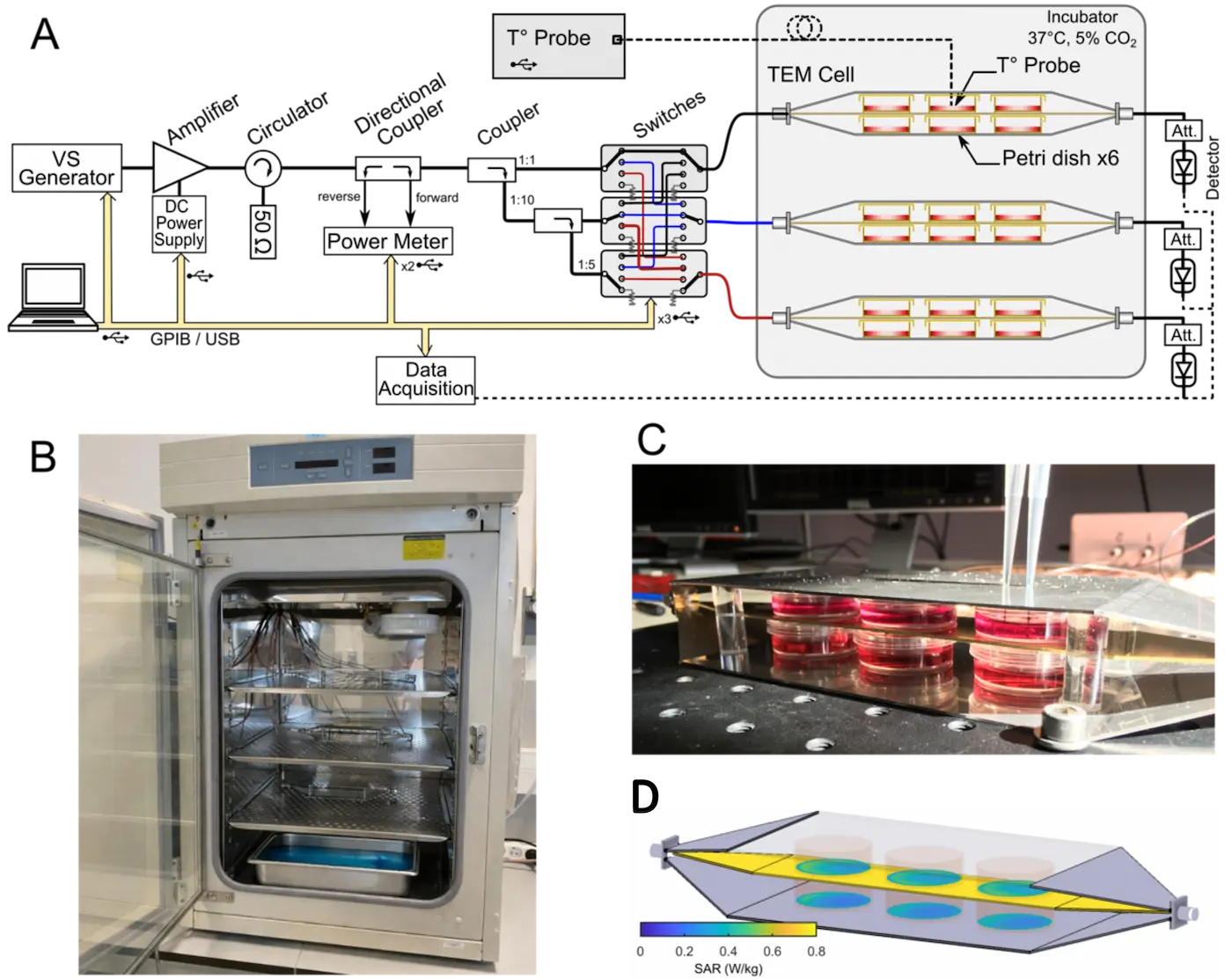
A new laboratory study led by researchers from CNRS – University of Bordeaux (UMR5218), in the framework of the GOLIAT project, has found no evidence that exposure to 5G signals produces measurable biological effects in brain cell models under controlled conditions. The findings have been published in the journal Scientific Reports.
The research focused on the 700 MHz frequency band, which is widely used in 4G and early 5G networks due to its ability to provide broad coverage and good indoor penetration. Despite its increasing presence in the environment, its potential biological effects have remained relatively underexplored.
Testing the effects of 5G exposure on brain cells
To address this gap, researchers conducted a series of experiments using two types of brain cells: primary rat astrocytes and human neuroblastoma cells (SH-SY5Y).
Cells were exposed to 5G-modulated radiofrequency electromagnetic fields under carefully controlled laboratory conditions. Exposure levels were selected to reflect realistic scenarios, and experiments were carried out under isothermal conditions, ensuring that any observed effects would not be due to heating.
Using a blinded protocol, in which researchers analysed coded samples without knowing whether they had been exposed or not, the study examined both short exposures (1 hour) and longer exposures (24 hours), with additional measurements taken after a recovery period to detect any delayed effects.
No measurable changes in key indicators of cell health
Researchers assessed several key indicators of cellular health and function, including cell viability (whether cells remain alive and healthy), apoptosis (programmed cell death), oxidative stress (a marker of cellular stress), and proliferation (the ability of cells to grow and divide).
Across all exposure conditions, the results showed no statistically significant differences between exposed cells and control samples. Cell viability remained high, with no evidence of increased cell death. Levels of apoptosis were unchanged, oxidative stress markers remained stable, and cell proliferation was unaffected.
Importantly, these findings were consistent across both cell types and across all exposure durations, including after a 24-hour recovery period.
Contributing to the evidence base on 5G and health
“These findings provide experimental evidence that, under controlled conditions, 5G-modulated radiofrequency exposure does not induce detectable adverse effects in these brain cell models,” said Emilie Puginier, researcher at the CNRS – University of Bordeaux (UMR5218) and first author of the study.
“While our results are consistent with much of the existing literature, further research is needed to explore long-term exposures, additional biological endpoints and more complex systems,” added Isabelle Lagroye, researcher at CNRS – University of Bordeaux (UMR5218) and senior author of the study.
Reference
Puginier E, Leclercq L, Poulletier de Gannes F, Hurtier A, Orlacchio R, Nabos P, et al. Biological effects of 5G-modulated 700 MHz RF-EMF exposure on neuronal and glial cell models under isothermal conditions. Scientific Reports. 2026;16:10767. doi:10.1038/s41598-026-43960-4.

 #ProjectGOLIAT
 Linkedin